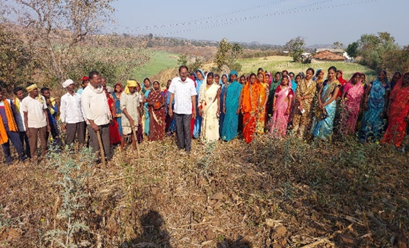
Green Gloval Fund – Chhindwara 2024-2025
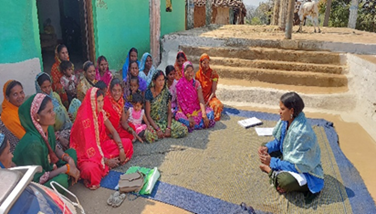
Economic Empowerment of Dalit and Tribal Women and Girls in Chhindwara District
Women Leadership Development
Initially 32 villages in Tamiya and Harrai blocks were selected. 32 × 96 women were trained to become leaders. This training helps women take part in important social, economic, and community decisions. They also work with Satyakam on issues that affect women and girls in their communities.
Output
Started with 3072 women leaders in 32 villages of block Tamiya and Harrai of Chhindwara district.
Outcome: Currently, women leaders and teenage girls are actively taking leadership roles. They have formed 32 women’s organizations and made their presence and work known in the community.
Input
The program connects women from the community with Satyakam and is creating a large women’s organization. In the selected villages, 760 women (40 × 19) are coming forward as leaders at the organization level.
2. Involving beneficiaries
women, men, youth, and traditional farming knowledge
Village-level community meetings were held to teach women and girls about exploitation, gender inequality, leadership, and laws.
Women from marginalized communities learned about their rights and issues. This helped them speak up, take part in social, economic, and community decisions, and lead effectively.
Community organizations were formed, giving priority to 64 women leaders and 32 girls from marginalized communities.
Each organization has 15–20 members.
The goal of these women’s organizations is to empower women, support gender equality, promote constitutional values, and address violence against women.
Group members were connected with local leaders like Sarpanch, PRI members, Anganwadi workers, school teachers, and ASHA workers to involve the community more.
Women, men, and youth were encouraged to work in agriculture and traditional food crops. This promoted organic farming. Women also started small maize-based businesses.
3. Changes in the community from the project:
The organization’s vision, mission, and work reached the community.
Work expanded to remote tribal and hilly villages, increasing the organization’s reach.
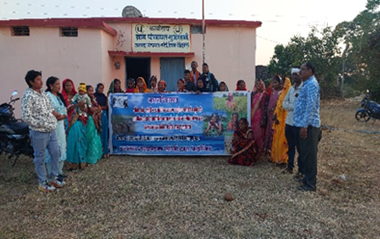
4. Strengthening programs and environment with women:
The organization became stronger and confident to reach more people.
Women leaders promoted organic farming and traditional food crops. They also grew in equality, justice, empowerment, and leadership.
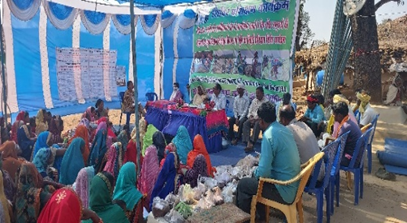
5. Helping increase community participation and awareness – changes:
Women leaders in the community have become stronger in social, economic, political, and community decisions. Their confidence and leadership skills have improved, helping them address and explain issues.
In 32 villages of Tamiya and Harrai, 32 women leaders, 608 women leaders, and 32 adolescent girls have started participating in social decision-making.
Women’s organizations have been connected with a large FPO called Satyakam Jan Kalyan Committee.Women leaders have gained knowledge and skills about rights, injustice, violence, and legal processes.5,16 volunteer women promoted organic farming and traditional crops by connecting with fertilizer and seed companies. The project completed the first phase in 2024 and the second phase in 2025.
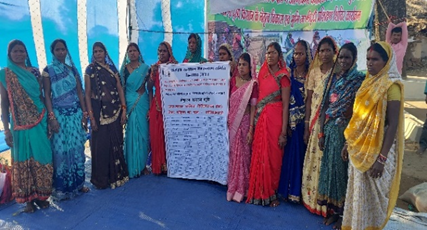
These connections with fertilizer and seed companies helped improve women’s income and gave them more economic empowerment.
6. Increasing women’s participation and leadership roles
760 women and adolescent girls gained understanding about social issues, values, and their rights.
Through community meetings, 900 women leaders were encouraged to work in agriculture, traditional crops, and livelihood opportunities.
3,320 women received training in organic farming and traditional crops, as well as justice, equality, gender issues, freedom, and constitutional values.
4,32 women’s organizations were created, which will connect with government policies and programs to benefit the community.
7. Organic fertilizers, agriculture, food security, and employment opportunities have been provided through grassroots work, including influencing the organization’s policies.
1. Marginalized women and girls have been supported in the project.
2. Livelihood opportunities have been provided in the fields of agriculture, food security, and small-scale industries.
3. Advice and information have been provided on women’s legal matters.
4. Women and girls have been empowered to address injustice, violence, and discrimination, and have been trained as local leaders.
5. Women and girls from marginalized and disadvantaged communities will be mobilized and organized.
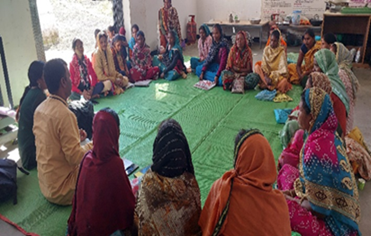
8. Skill Development:
Livelihood Training: Training in organic farming, local agriculture, and other community-based skills.
Self-Help Groups: Formation and strengthening of groups, promoting collective farming.
Awareness Campaigns: Workshops on education, health, hygiene, and legal rights.
Leadership Training:
Sessions on communication, problem-solving, team building, and confidence building .