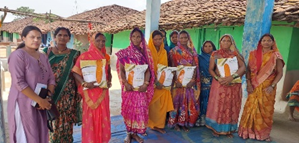
Ankuran Program 2024-2025
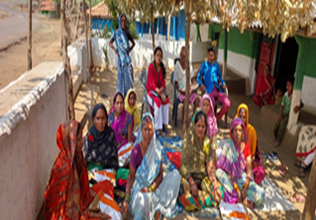
The Ankuran Program focuses on gender inequality, violence against women, and awareness of constitutional rights among women and girls in Dalit and Adivasi communities.
Within the guidance of Satyakam Jan Kalyan Samiti, work was done with Bharia community women on issues like: gender discrimination, education, health, low wages, unpaid work, violence, and decision-making power. The program also addressed problems caused by land disputes and social practices like superstition and lack of education. Solutions focused on digital education, equal pay, social security, and preventing violence, as highlighted in various reports.
“Status of Bharia Community Women and Grassroots Work on Gender Equality and Discrimination”
Socio-Economic Situation of Bharia Community in the Project Area:
The Bharia tribal and other tribal communities live in Tamiya and Harrai blocks of Chhindwara district. Within the Ankuran Program led by Satyakam Jan Kalyan Samiti, a study was conducted in 30 villages of Tamiya and 30 villages of Harrai to understand their social and economic conditions.The study found that women in the Bharia and other tribal communities were not aware of their rights and had limited legal knowledge. Economically, they are underdeveloped, and education levels are low, resulting in high dropout rates. Their language, food, and clothing are very different from other communities. Most families do not have government jobs, and women rarely use communication tools, mobile phones, or motorcycles. Many still depend on forest resources for herbs and agricultural labor for income.Because they live in remote areas, these communities have little contact with outside development programs. Despite government policies, they remain socially and economically weak and have limited understanding of gender equality and violence against women.The organization provided capacity-building training to help women understand their rights, gender equality, and freedom, and to promote social and human values. Following this vision, women from these marginalized communities have been encouraged to take on leadership roles.
Main Areas/Objectives of the Program:
• Focus Areas: Block Tamia and Harrai
• Program Objectives:
1, Support marginalized women and girls in the project.
2, Provide livelihood opportunities in agriculture, food grains, and small industries.
3, Give advice and information on women’s legal matters.
4, Help women and girls understand their rights, fight injustice and violence, learn constitutional values, and develop leadership skills at the local level.
5, Mobilize and organize women and girls from marginalized and disadvantaged
Planned Activities of the Program
Program Planning and Review
• Leadership among women from marginalized communities is being promoted in line with Satyakam’s vision and mission.
• Women leaders are encouraged to understand social issues so they can know their own values and rights.
• Training is provided on women’s rights, gender equality, gender discrimination, freedom, and constitutional values.
• Community meetings are held in 60 villages to motivate women leaders to work in agriculture, traditional food grains, and livelihood opportunities.
• A maize (corn) based small scale industry will be initiated.
• 60 women’s “Ankuran” organizations will be formed and linked with the government.
• Women will be supported to take leadership roles and move forward in society.
• A total of 180 women (60*3) from the community will actively join Satyakam and be appointed to important positions in the organization.
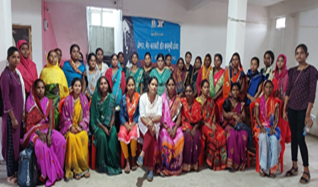
2. Leadership Development:
In 60 villages of Tamia and Harrai blocks, 180 women were trained in leadership. Women leaders and adolescent girls were given leadership training through the Ankuran program. This helped them understand gender justice and build their confidence. They learned to take part strongly in social, economic, political, and community decisions. Now, they are working together with Satyakam on different issues affecting women and girls in society.
3. Training on Gender, Equality, Constitutional Values, and Violence Against Women:
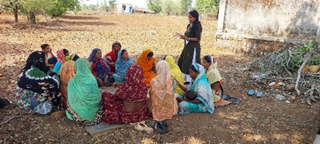
In Tamia and Harrai blocks, 180 women leaders were trained to understand social issues related to gender equality and violence against women. The training helped them learn about women’s rights, gender discrimination, equality, and freedom. It also taught them about constitutional, social, and human values so they can grow and act confidently in their communities.
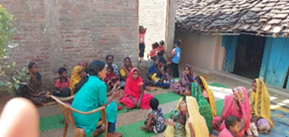
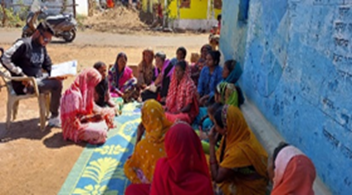
60 villages – in Community meetings and group formation
• Ankuran organizations were formed in 60 villages. Priority is given to women and girls from marginalized communities.
• Each organization has 12–15 members.
• The main goal of the Ankuran organization is to address issues like gender inequality, constitutional values, and violence against women.
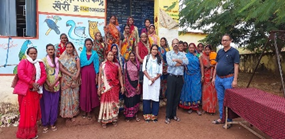
• Different local stakeholders are involved as members, including village leaders (Sarpanch), PRI members, Anganwadi workers, school teachers, and ASHA workers.
• Women are encouraged to work on livelihood opportunities, such as agriculture and traditional food production.
Targets of the Program for 2024–2025:
Project Goal:
To empower women by improving their skills and ability to achieve gender equality and sustainable livelihoods through training, skill development, and advocacy.
Specific Objectives:
Building Capacity for Gender Equality:
• Increase women’s understanding of gender equality and their rights.
• Develop leadership skills in women and increase their participation in decision-making.
• Promote gender-sensitive policies and practices within the community.
Livelihood Promotion:
• Improve women’s skills in income-generating activities.
• Help women entrepreneurs access financial resources, markets, and networks.
• Promote sustainable and eco-friendly livelihoods that match local needs and environmental concerns.